





Wheel Nut Indicators: The Complete Fleet Buyer's Guide
Wheel nut indicators are one of the simplest and most effective tools for supporting routine wheel safety inspections on commercial vehicles. By providing a clear visual reference, they help drivers and technicians identify potential wheel nut movement before it develops into a more serious issue. This guide explains how wheel nut indicators work, their benefits, the different types available and how to choose the right solution for your fleet.
Estimated reading time: 9 minutes
Who this guide is for: Fleet Managers • Transport Managers • Workshop Managers • Commercial Vehicle Technicians • Owner Operators
Last reviewed: July 2026
Quick Answer
Wheel nut indicators are small, highly visible devices that fit over individual wheel nuts to provide a visual indication if a wheel nut has rotated or loosened.
They don't stop wheel nuts from coming loose, but they make movement much easier to identify during daily walkaround checks and scheduled inspections, helping fleets detect potential issues earlier.
Browse Parma's range of Wheel Nut Indicators.
At a Glance
In this guide
-
What wheel nut indicators are
-
How they work
-
Their benefits for commercial fleets
-
Different types available
-
Choosing the correct indicators
-
Frequently asked questions
What Are Wheel Nut Indicators?
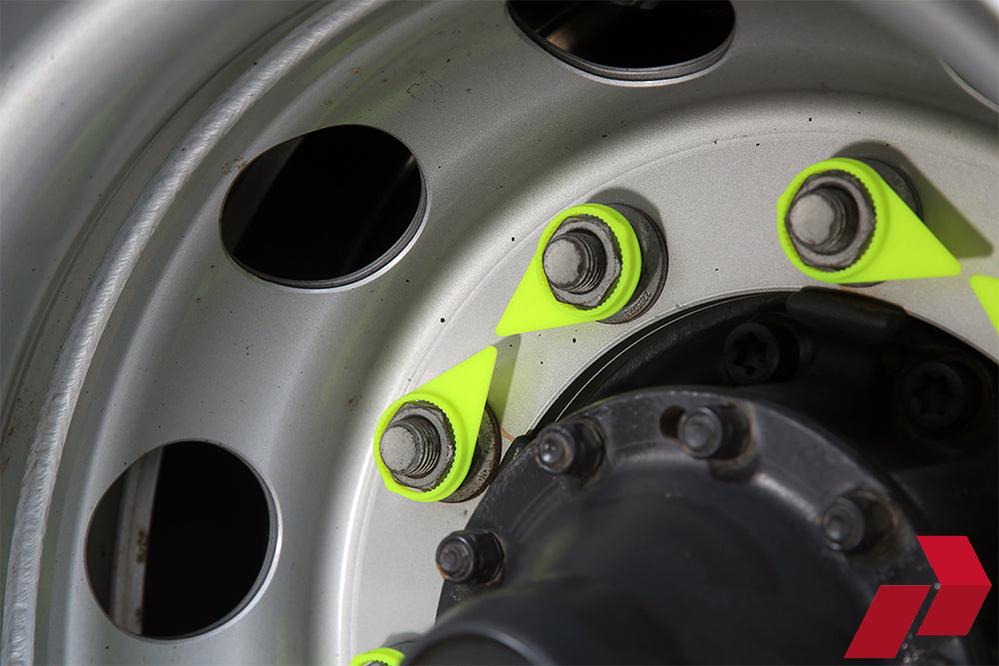
Wheel nut indicators (sometimes called wheel nut markers) are brightly coloured plastic devices that fit onto individual wheel nuts.
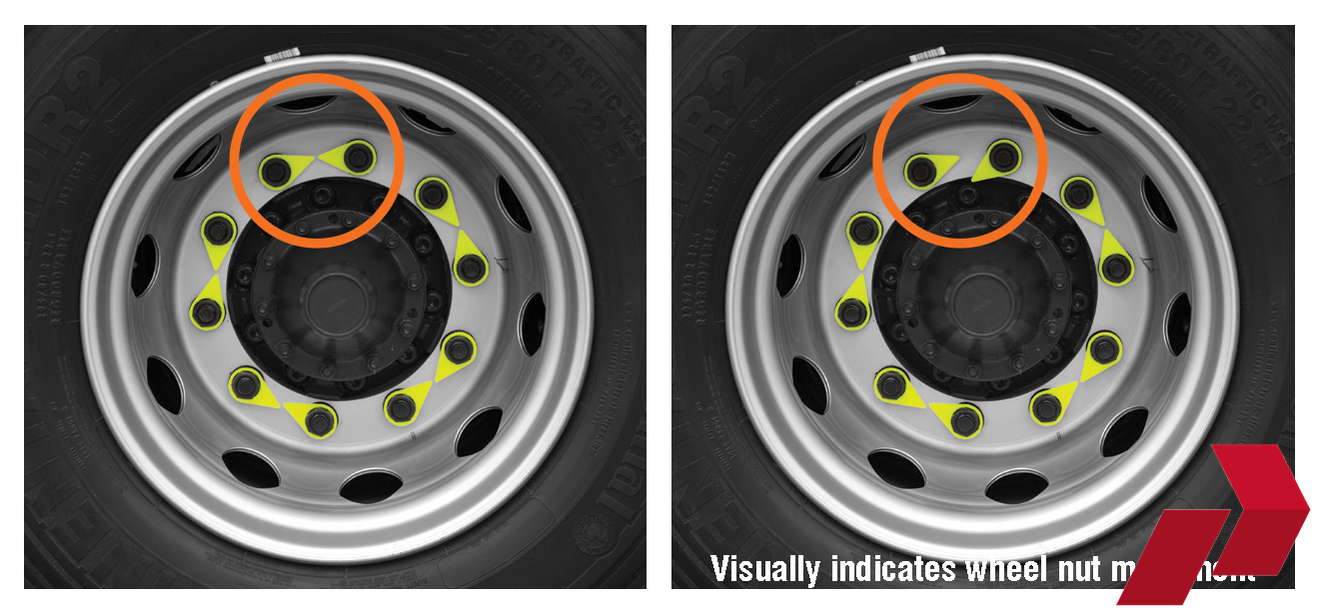
When installed correctly, each indicator is positioned in a consistent direction—often pointing towards the neighbouring wheel nut.
This creates a clear visual pattern around the wheel.
If a wheel nut begins to rotate, the corresponding indicator also moves, making any potential loosening immediately obvious during a visual inspection.
Because no specialist equipment is required to interpret them, wheel nut indicators have become a common feature across commercial vehicle fleets worldwide.
Why Are Wheel Nut Indicators Used?
Wheel security is an essential part of commercial vehicle maintenance.
Factors such as incorrect installation, insufficient torque, excessive loading or component wear can all contribute to wheel nut movement over time.
Wheel nut indicators help maintenance teams by making changes easier to spot before they become more serious.
Key benefits include:
-
Supporting routine walkaround inspections
-
Providing an immediate visual reference
-
Encouraging consistent inspection procedures
-
Helping identify potential wheel nut movement
-
Low-cost, easy-to-fit solution
They form part of a wider preventative maintenance strategy rather than replacing correct wheel fitting procedures.
How Do Wheel Nut Indicators Work?
Each indicator fits securely over an individual wheel nut.
During installation, the indicators are aligned in a consistent pattern, such as:
-
Pointing towards adjacent wheel nuts
-
Forming a circular pattern
-
Facing the centre of the wheel
Once installed, inspectors simply compare the current position with the original alignment.
If one indicator has rotated away from the established pattern, this may indicate that the corresponding wheel nut has moved and requires further investigation.
It's important to remember that the indicator highlights possible movement—it doesn't diagnose the underlying cause.
For a more detailed explanation, read:
How Do Wheel Nut Indicators Work?
Do Wheel Nut Indicators Prevent Wheel Nuts Coming Loose?
No.
This is one of the most common misunderstandings.
Wheel nut indicators are monitoring devices, not locking devices.
They:
✔ Help identify possible movement.
✔ Make inspections quicker.
✔ Support preventative maintenance.
They do not:
-
Tighten wheel nuts
-
Prevent loosening
-
Replace correct torque procedures
-
Improve wheel retention
Where additional wheel security is required, dedicated wheel safety products should be considered.
Parma's guide Choosing a Wheel Safety Device explains the available options.
Types of Wheel Nut Indicators
Although they all perform the same basic function, wheel nut indicators are available in several designs.
Standard Indicators
The most common type.
Designed to provide a simple visual indication of wheel nut movement.
Suitable for most commercial vehicle applications.
High-Visibility Indicators
Manufactured in fluorescent colours to improve visibility during inspections.
These are particularly popular on fleets carrying out frequent walkaround checks.
Temperature-Detecting Indicators
Some specialist indicators incorporate heat-sensitive materials that change appearance if excessive temperatures are reached.
This may provide an early indication of overheating within the wheel assembly.
These products are typically used where enhanced monitoring forms part of a fleet's maintenance strategy.
Which Vehicles Use Wheel Nut Indicators?
Wheel nut indicators are widely used across the commercial transport sector, including:
-
HGVs
-
Articulated tractor units
-
Rigid trucks
-
Trailers
-
Buses
-
Coaches
-
Municipal vehicles
-
Construction vehicles
-
Agricultural support fleets
-
Utility vehicles
Their low cost and ease of installation make them suitable for fleets of almost any size.
Choosing the Right Wheel Nut Indicators
When selecting wheel nut indicators, consider:
Wheel Nut Size
Indicators must match the diameter of the wheel nut to ensure a secure fit.
Colour
Bright colours improve visibility during inspections.
Many fleets standardise a single colour across their vehicles.
We'll explore colour selection in more detail here:
Continue Reading: What Colour Wheel Nut Indicators Should You Choose?
Operating Environment
Commercial vehicles operating in demanding environments should use durable indicators designed to withstand:
-
UV exposure
-
Road salt
-
Brake dust
-
Moisture
-
Temperature variation
Fleet Standardisation
Using the same style and colour of indicator throughout the fleet simplifies inspections, stock management and future replacement.
Best Practice for Installation
To achieve the greatest benefit from wheel nut indicators:
-
Install all indicators in a consistent orientation.
-
Check them during every walkaround inspection.
-
Replace damaged or missing indicators promptly.
-
Train drivers to recognise the correct alignment.
-
Include wheel indicator checks within routine maintenance schedules.
For detailed fitting guidance, read:
Continue Reading: How to Fit Wheel Nut Indicators
Wheel Nut Indicators as Part of Fleet Maintenance
Wheel nut indicators work best when combined with regular inspection procedures.
Many operators include them within daily driver checks, workshop inspections and scheduled servicing.
Parma's Essential Fleet Wheel Maintenance Checklist provides practical guidance for incorporating wheel inspections into preventative maintenance programmes.
 Parma Expert Insight
Wheel nut indicators don't replace skilled inspections—they make them more effective. By providing an immediate visual reference, they help drivers and technicians identify potential wheel nut movement quickly, supporting safer and more consistent maintenance routines.
Frequently Asked Questions
What do wheel nut indicators do?
They provide a visual indication if a wheel nut has moved, making it easier to identify potential issues during inspections.
Do wheel nut indicators stop wheel nuts coming loose?
No.
They monitor movement but don't prevent it.
Are wheel nut indicators suitable for all commercial vehicles?
They are available for most HGVs, trucks, trailers, buses and coaches, provided the correct size is selected.
How often should wheel nut indicators be checked?
They should be inspected as part of routine vehicle walkaround checks and scheduled maintenance.
We'll cover this in more detail here:
Continue Reading: How Often Should Wheel Nut Indicators Be Checked?
Can damaged wheel nut indicators still be used?
Damaged or missing indicators should be replaced promptly to ensure inspections remain reliable.
Related Resources
Continue reading:
You may also find these Parma resources useful:
Improve Wheel Safety Inspections Across Your Fleet
Wheel nut indicators are a simple, cost-effective addition to any commercial vehicle maintenance programme. By making potential wheel nut movement easier to identify during routine inspections, they help fleets support preventative maintenance, improve inspection consistency and reduce the risk of wheel-related issues going unnoticed.
Explore Parma's range of Wheel Nut Indicators to find durable solutions for HGVs, trucks, trailers, buses and other commercial vehicles.
