



Do Wheel Nut Indicators Prevent Wheel Nuts Coming Loose?
Wheel nut indicators are widely used across commercial vehicle fleets to support routine wheel safety inspections, but they're often misunderstood. One of the most common questions is whether they actually prevent wheel nuts from loosening. The short answer is no. Wheel nut indicators are designed to detect movement—not stop it. This guide explains the difference, how wheel nut indicators contribute to wheel safety and when additional wheel retention devices should be considered.
Estimated reading time: 7 minutes
Who this guide is for: Fleet Managers • Transport Managers • Workshop Managers • Commercial Vehicle Technicians • Owner Operators
Last reviewed: July 2026
Quick Answer
No. Wheel nut indicators do not prevent wheel nuts from coming loose.
Their purpose is to provide a clear visual indication if a wheel nut has moved, allowing drivers and technicians to identify potential issues during routine inspections. They are a monitoring device, not a locking or retention device.
To understand the different types of wheel safety products available, visit Parma's Choosing a Wheel Safety Device guide.
At a Glance
In this guide
-
Why wheel nuts can become loose
-
What wheel nut indicators actually do
-
The difference between monitoring and prevention
-
When wheel nut locks should be considered
-
Frequently asked questions
Why This Question Causes Confusion
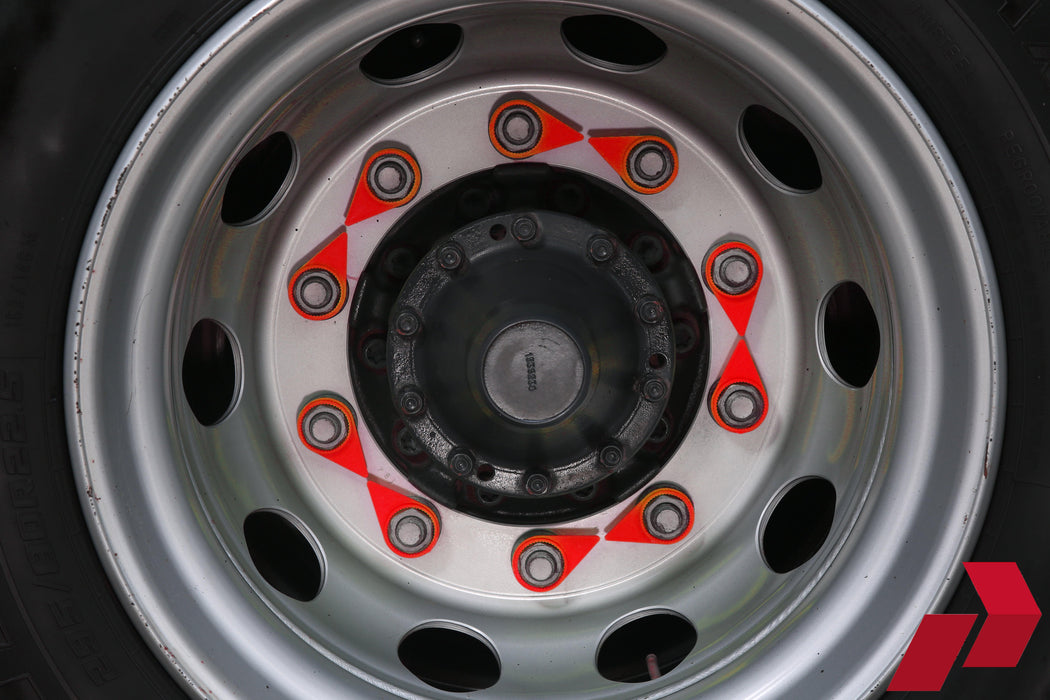
Wheel nut indicators are fitted directly onto wheel nuts, so it's understandable why some people assume they help keep the nuts tight.
In reality, they perform a completely different role.
Wheel nut indicators are designed to show movement—not prevent it.
Think of them as an inspection aid. They make potential wheel nut movement much easier to identify during daily walkaround checks or scheduled maintenance, but they have no mechanical influence over the wheel nut itself.
Understanding this distinction helps fleet operators choose the right product for the right application.
Why Wheel Nuts Can Become Loose
A correctly installed wheel should remain secure throughout normal operation.
However, wheel nut movement can occur if underlying issues develop.
Possible causes include:
-
Incorrect tightening procedures
-
Failure to achieve the specified torque
-
Damaged wheel studs or nuts
-
Wear within the wheel assembly
-
Poor maintenance practices
-
Incorrect wheel installation
-
Component failure
These are maintenance issues rather than product failures.
Wheel nut indicators help identify the symptoms of movement—they don't address the underlying cause.
What Wheel Nut Indicators Actually Do
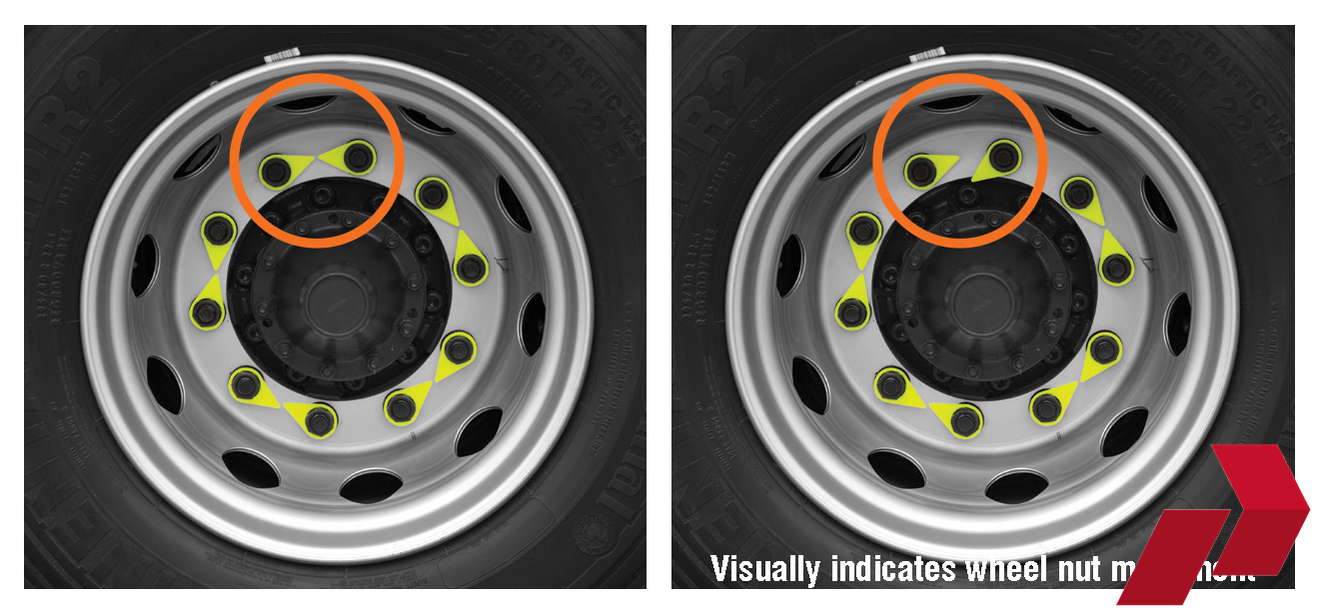
Each indicator fits securely over an individual wheel nut.
During installation, the indicators are aligned in a consistent pattern around the wheel.
If a wheel nut rotates, the indicator rotates with it.
This creates a simple visual warning that the wheel assembly should be inspected further.
The benefits include:
-
Faster walkaround inspections
-
Easier identification of potential movement
-
Consistent inspection standards
-
Earlier detection of possible problems
-
Low-cost preventative monitoring
Learn more about how this works in:
Continue Reading: How Do Wheel Nut Indicators Work?
What Wheel Nut Indicators Don't Do
Although extremely useful during inspections, wheel nut indicators cannot:
-
Prevent wheel nuts from rotating
-
Lock adjacent wheel nuts together
-
Increase wheel clamping force
-
Replace correct torque procedures
-
Eliminate routine inspections
They're designed to support maintenance—not replace it.
Any wheel nut movement identified should always be investigated by a competent technician.
Monitoring vs Prevention
One of the easiest ways to understand the difference is to separate monitoring from prevention.
|
Monitoring |
Prevention |
|
Identifies potential wheel nut movement |
Helps resist or control wheel nut movement |
|
Provides a visual inspection aid |
Provides additional wheel retention |
|
Supports maintenance procedures |
Supports mechanical wheel security |
|
Wheel nut indicators |
Wheel nut locks and other retention systems |
Both approaches have an important role to play within a comprehensive wheel safety strategy.
When Should Wheel Nut Locks Be Used?
Where fleets require an additional level of wheel security, wheel nut locks may be appropriate.
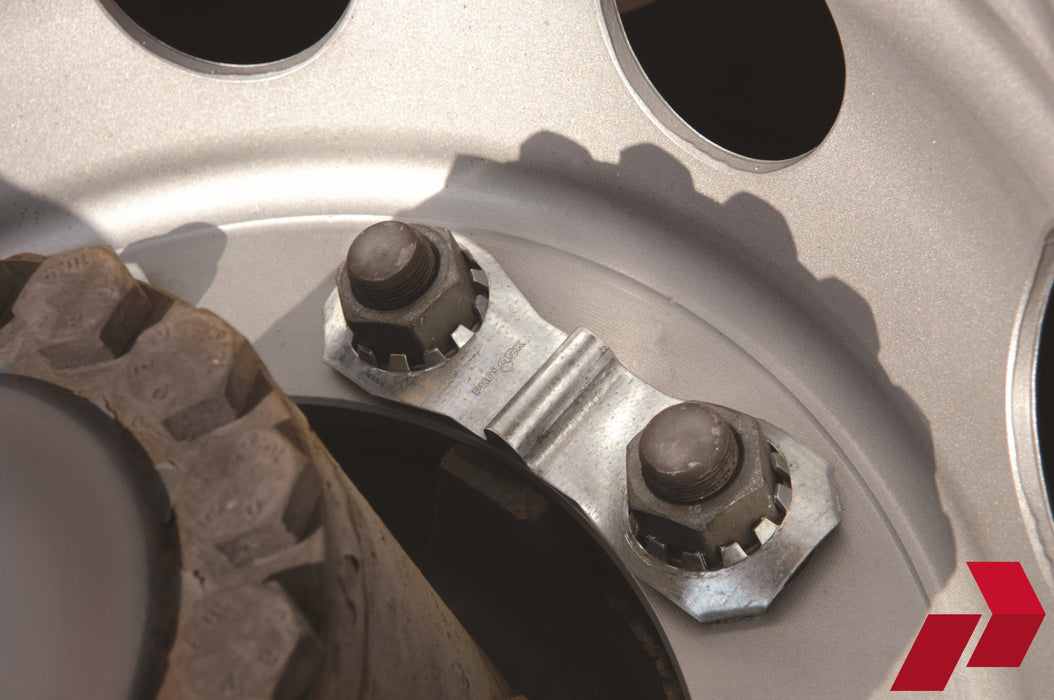
Unlike indicators, wheel nut locks are designed to help maintain wheel security by providing mechanical retention between adjacent wheel nuts.
They're commonly used on:
-
Long-distance haulage fleets
-
High-mileage vehicles
-
Safety-critical applications
-
Vehicles operating in demanding environments
Wheel nut indicators and wheel nut locks are not competing products—they perform different functions and are often used together.
Explore Parma's range of Wheel Nut Locks
Why Many Fleets Use Both
Many operators choose to install both wheel nut indicators and wheel nut locks.
This combination provides two complementary benefits.
Wheel nut indicators:
-
Support visual inspections.
-
Highlight potential movement.
-
Improve inspection efficiency.
Wheel nut locks:
-
Provide mechanical wheel retention.
-
Help reduce the risk of adjacent wheel nuts loosening.
-
Form part of a wider wheel safety strategy.
Using both products allows fleets to benefit from both early detection and additional mechanical security.
Wheel Safety Is About More Than One Product
No single product can replace a well-managed maintenance programme.
Effective wheel safety should include:
-
Manufacturer-approved installation procedures
-
Correct torque settings
-
Scheduled retorque checks where applicable
-
Driver walkaround inspections
-
Workshop maintenance
-
Wheel nut indicators
-
Wheel nut locks where appropriate
Parma's Essential Fleet Wheel Maintenance Checklist explains how these elements work together as part of a preventative maintenance programme.
Parma Expert Insight
The strongest wheel safety strategies combine good maintenance with the right products. Wheel nut indicators help identify potential movement, while wheel nut locks provide additional mechanical protection. Understanding the role of each allows fleets to build a more effective inspection and maintenance programme.
Common Misunderstandings
"Indicators Stop the Wheel Nut Turning"
They don't.
They simply rotate with the wheel nut if movement occurs.
"If the Indicators Haven't Moved, Everything Is Fine"
Wheel nut indicators are an excellent inspection aid, but they should always be used alongside routine maintenance and visual checks.
"Wheel Nut Locks Replace Indicators"
Not necessarily.
Many fleets choose to use both because they perform different functions.
"I Only Need Indicators on My Tractor Unit"
Wheel nut indicators are equally valuable on trailers, rigid trucks, buses and coaches where regular wheel inspections are carried out.
Frequently Asked Questions
Do wheel nut indicators physically stop wheel nuts coming loose?
No.
They provide a visual indication if movement occurs but have no locking function.
What happens if an indicator moves?
It suggests the corresponding wheel nut may have rotated and that the wheel assembly should be inspected by a competent technician.
Should I use wheel nut indicators or wheel nut locks?
They serve different purposes.
Indicators monitor movement, while wheel nut locks provide additional mechanical retention.
Many fleets use both together.
Can wheel nut indicators replace routine maintenance?
No.
They're designed to support inspection procedures, not replace them.
Are wheel nut indicators suitable for all commercial vehicles?
Yes.
They are widely used on HGVs, trucks, trailers, buses and coaches, provided the correct size is selected.
Related Resources
Continue reading:
You may also find these Parma resources useful:
-
Essential Fleet Wheel Maintenance Checklist
Choose the Right Wheel Safety Solution for Your Fleet
Wheel nut indicators are a valuable inspection tool that helps identify potential wheel nut movement quickly and consistently. When combined with good maintenance practices—and, where appropriate, wheel nut locks—they form part of a comprehensive approach to commercial vehicle wheel safety.
Explore Parma's range of Wheel Nut Indicators to support faster, more effective wheel inspections across your fleet.
