





How to Fit Wheel Nut Indicators Correctly
Correct installation is essential if wheel nut indicators are to provide an effective visual warning of potential wheel nut movement. Fortunately, fitting wheel nut indicators is quick, straightforward and requires no specialist equipment. This guide explains how to fit wheel nut indicators correctly, common mistakes to avoid and how to ensure they deliver reliable visual inspections throughout their service life.
Estimated reading time: 7 minutes
Who this guide is for: Fleet Managers • Transport Managers • Workshop Managers • Commercial Vehicle Technicians • Owner Operators
Last reviewed: July 2026
Quick Answer
Wheel nut indicators should be fitted by pushing them firmly onto clean, correctly torqued wheel nuts before aligning every indicator in a consistent direction around the wheel.
Once installed, they should be checked during every routine vehicle inspection. Any indicator that has moved out of alignment should be investigated immediately.
Browse Parma's range of Wheel Nut Indicators
At a Glance
In this guide
-
When wheel nut indicators should be fitted
-
Step-by-step installation
-
Choosing the correct alignment pattern
-
Common installation mistakes
-
Frequently asked questions
Before You Start
Wheel nut indicators should only be installed after the wheel has been correctly fitted and all wheel nuts have been tightened to the vehicle or wheel manufacturer's specified torque.
Wheel nut indicators are not intended to compensate for poor installation or incorrect torque procedures.
Before fitting, ensure:
-
Wheel nuts are correctly torqued.
-
The wheel assembly has been inspected.
-
The wheel nuts are clean and free from excessive dirt or grease.
-
The correct size of indicator has been selected.
Choosing the correct indicator size is essential for a secure fit.
Step 1 – Confirm the Correct Indicator Size
Wheel nut indicators rely on a snug fit over the wheel nut.
If the indicator is too large, it may fall off during operation.
If it's too small, it may not fit correctly or could become damaged during installation.
Always match the indicator to the wheel nut size before fitting.
For advice on selecting the correct product, see:
Continue Reading: Wheel Nut Indicators: The Complete Fleet Buyer's Guide
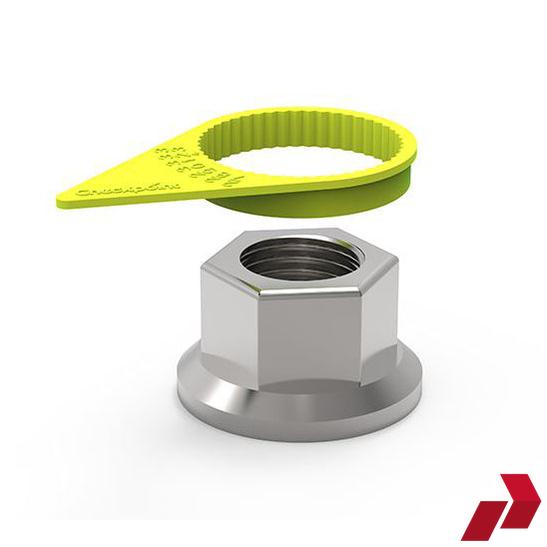
Step 2 – Push the Indicator Fully Onto the Wheel Nut
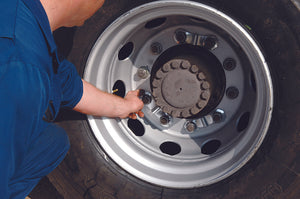
Position the indicator over the wheel nut and press it firmly into place.
The indicator should fit securely without excessive force.
Once fitted correctly:
-
It should sit squarely on the wheel nut.
-
It should not wobble.
-
It should remain securely attached during normal vehicle operation.
Repeat the process for every wheel nut on the wheel.
Step 3 – Align Every Indicator
This is the most important part of the installation process.
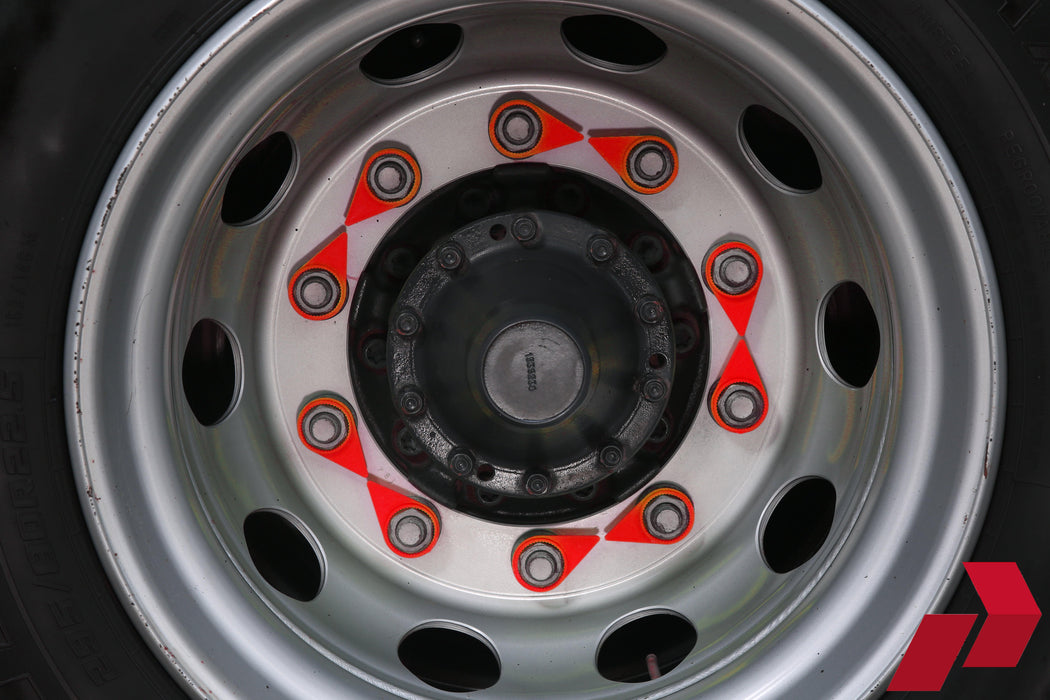
Each indicator should point in the same logical direction to create a clear visual reference.
Common alignment patterns include:
Adjacent Pair Pattern
Each indicator points directly towards the next wheel nut.
This is one of the most widely used arrangements because changes are immediately obvious.
Circular Pattern
All indicators are arranged to create a repeating circular pattern around the wheel.
This provides a consistent appearance and makes routine inspections straightforward.
Fleet Standard Pattern
Some operators establish a company-wide installation pattern across every vehicle.
This allows drivers and technicians to inspect any vehicle using exactly the same visual reference.
Consistency is more important than the specific pattern chosen.
Step 4 – Carry Out a Visual Check
Once every indicator has been fitted:
-
Check they all point in the intended direction.
-
Confirm none are loose.
-
Ensure every wheel nut has an indicator fitted.
-
Verify the pattern is consistent around the entire wheel.
Taking a few moments to confirm the installation now makes future inspections much quicker.
When Should Wheel Nut Indicators Be Fitted?
Wheel nut indicators are commonly installed:
-
After new wheel installation.
-
Following tyre replacement.
-
During scheduled servicing.
-
When replacing worn or damaged indicators.
-
As part of a fleet-wide wheel safety programme.
Whenever wheel nuts are removed and refitted, it's good practice to inspect the condition of the indicators before reinstalling them.
How Should They Be Inspected Afterwards?
Once fitted, wheel nut indicators should become part of the vehicle's routine inspection process.
Drivers or technicians should look for:
-
Indicators that have rotated.
-
Missing indicators.
-
Damaged indicators.
-
Loose indicators.
-
Indicators that no longer follow the original alignment pattern.
Any change should trigger further inspection of the wheel assembly.
Common Installation Mistakes
Even though fitting wheel nut indicators is straightforward, a few common mistakes reduce their effectiveness.
Installing Them Before Torqueing the Wheel
Wheel nuts should always be tightened correctly before indicators are fitted.
Installing indicators first serves no useful purpose because the alignment will change during tightening.
Random Alignment
If every indicator points in a different direction, there's no clear visual reference.
Consistent alignment is essential.
Using the Wrong Size
Poorly fitting indicators may become detached or fail to provide reliable monitoring.
Always match the indicator to the wheel nut diameter.
Ignoring Missing Indicators
A missing indicator removes part of the visual inspection system.
Replace missing indicators promptly to maintain consistent inspection standards.
Reusing Damaged Indicators
Indicators that have cracked, become distorted or no longer fit securely should be replaced.
Should Drivers Be Trained?
Yes.
Wheel nut indicators are most effective when drivers understand:
-
What the normal alignment should look like.
-
How to recognise movement.
-
What action to take if an indicator has rotated.
-
Why missing indicators should be reported.
Even a short briefing can significantly improve the consistency of daily walkaround inspections.
Parma Expert Insight
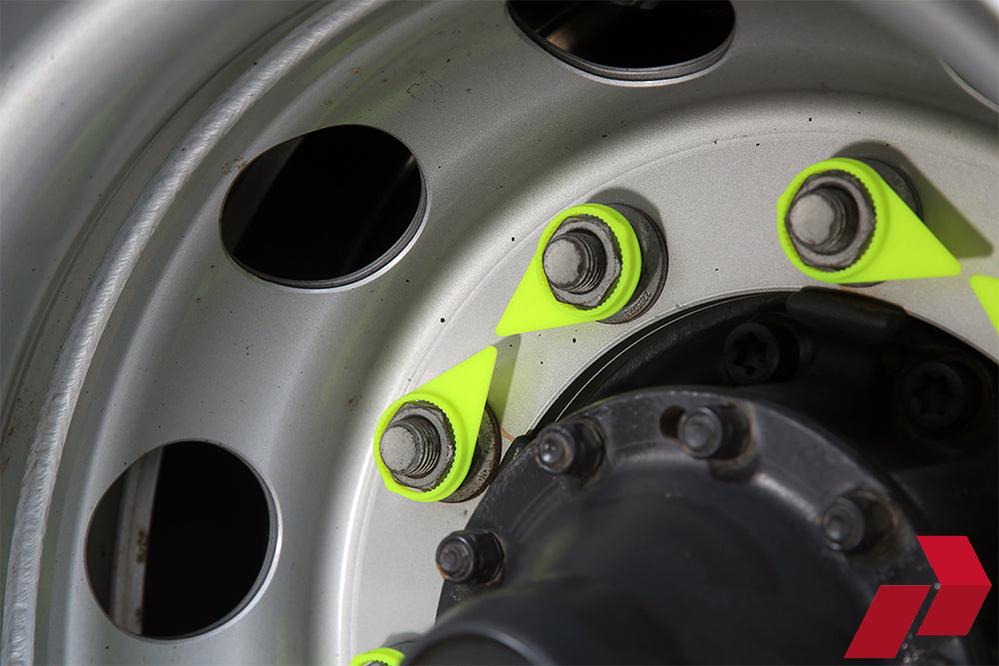
The effectiveness of a wheel nut indicator isn't determined by how it's manufactured—it's determined by how consistently it's installed. A standard installation pattern across every vehicle makes inspections faster, simpler and more reliable.
Frequently Asked Questions
Can I fit wheel nut indicators myself?
Yes.
Installation is straightforward, provided the wheel has already been correctly fitted and torqued.
Do I need any special tools?
No.
Most wheel nut indicators are simply pushed onto the wheel nut by hand.
Which direction should the indicators point?
There isn't one mandatory pattern.
The important thing is that every indicator follows the same arrangement around the wheel.
Can I reuse wheel nut indicators?
If they're undamaged and still fit securely, they can usually be reused.
Damaged or loose indicators should be replaced.
What should I do if an indicator has moved?
The wheel assembly should be inspected by a competent person to determine whether the corresponding wheel nut has moved and whether any corrective action is required.
Related Resources
Continue reading:
You may also find these Parma resources useful:
-
How to Stop Wheel Nuts Coming Loose
Install Wheel Nut Indicators with Confidence
Correct installation ensures wheel nut indicators provide a clear, consistent visual reference during every inspection. Combined with proper wheel fitting procedures and routine maintenance, they help commercial vehicle operators identify potential wheel nut movement quickly and respond before it develops into a more significant issue.
Explore Parma's range of Wheel Nut Indicators to find reliable solutions for HGVs, trucks, trailers, buses and commercial fleets.
