





How Do Wheel Nut Indicators Work?
Wheel nut indicators provide one of the quickest and simplest ways to identify potential wheel nut movement during routine vehicle inspections. While they don't prevent wheel nuts from loosening, they create a clear visual reference that allows drivers and technicians to spot changes before they develop into more serious issues. This guide explains exactly how wheel nut indicators work, why they're effective and how they should be used as part of a wider wheel safety strategy.
Estimated reading time: 7 minutes
Who this guide is for: Fleet Managers • Transport Managers • Workshop Managers • Commercial Vehicle Technicians • Owner Operators
Last reviewed: July 2026
Quick Answer
Wheel nut indicators fit over individual wheel nuts and are aligned in a consistent pattern around the wheel. If a wheel nut rotates or begins to loosen, the indicator moves with it, making the change immediately visible during a walkaround inspection. They are designed to highlight potential movement—not prevent it.
Browse Parma's range of Wheel Nut Indicators
At a Glance
In this guide
-
How wheel nut indicators function
-
Why correct alignment matters
-
What indicators can and can't tell you
-
Different indicator designs
-
Best practice for inspections
-
Frequently asked questions
The Principle Behind Wheel Nut Indicators
A correctly torqued wheel nut should remain in the same position after installation.
Wheel nut indicators take advantage of this by creating a visible reference point on every wheel nut.
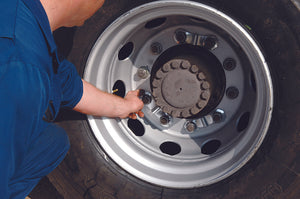
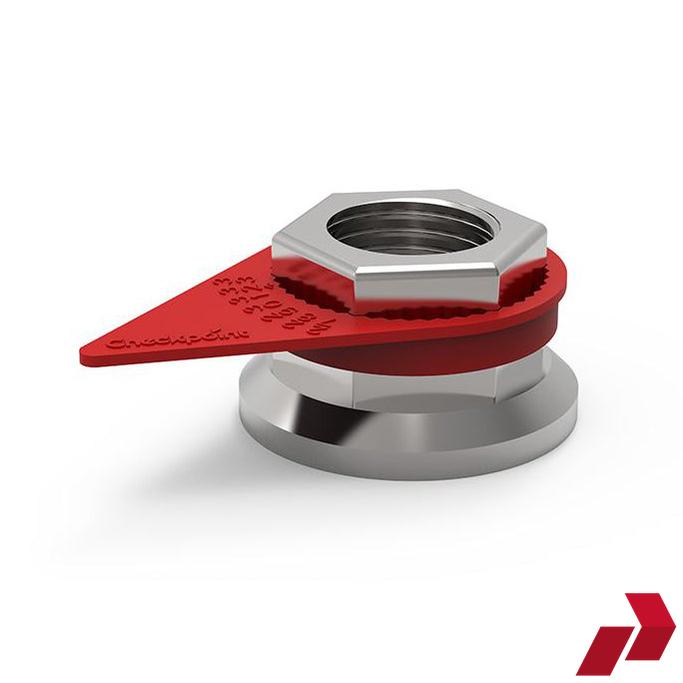
Each indicator is fitted over a wheel nut and aligned with the others in a consistent pattern. If a wheel nut rotates, even by a relatively small amount, the indicator rotates with it.
This means an inspector doesn't need to judge the position of every wheel nut individually—they simply need to look for any indicator that's no longer aligned with the rest.
How They're Installed
Although installation is straightforward, consistency is essential.
Most fleets install indicators so they:
-
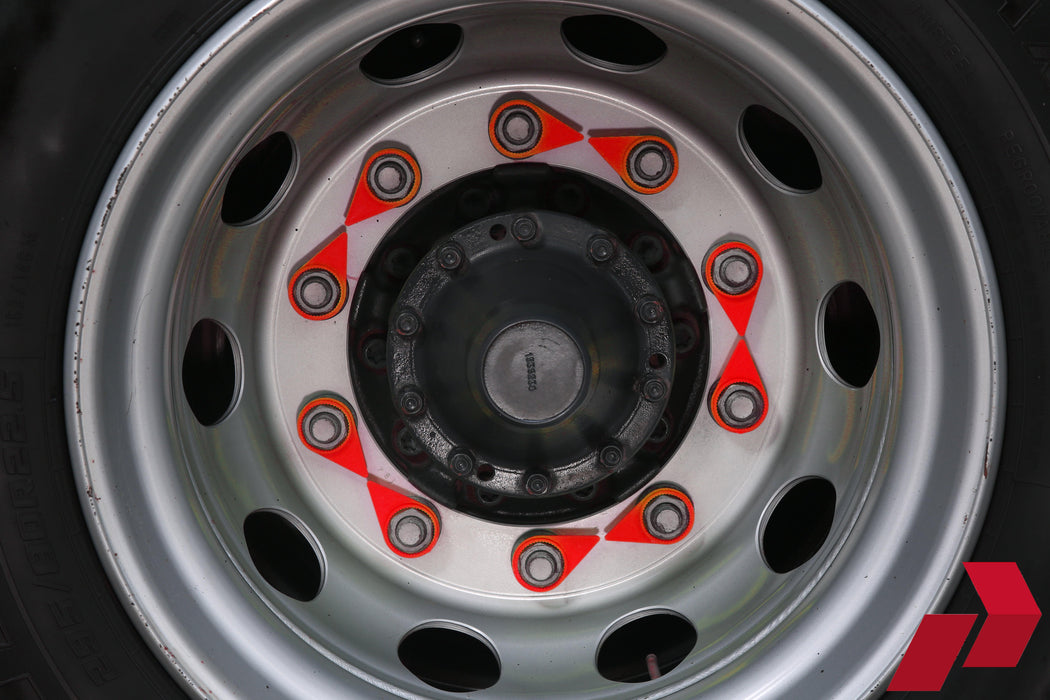
Point towards the adjacent wheel nut.
-
Form a repeating circular pattern.
-
Create an easily recognisable visual arrangement.
During future inspections, any indicator that's out of position immediately stands out.
Correct installation is one of the reasons wheel nut indicators can be checked so quickly during daily vehicle inspections.
For fitting guidance, read: How to Fit Wheel Nut Indicators
What Happens if a Wheel Nut Moves?
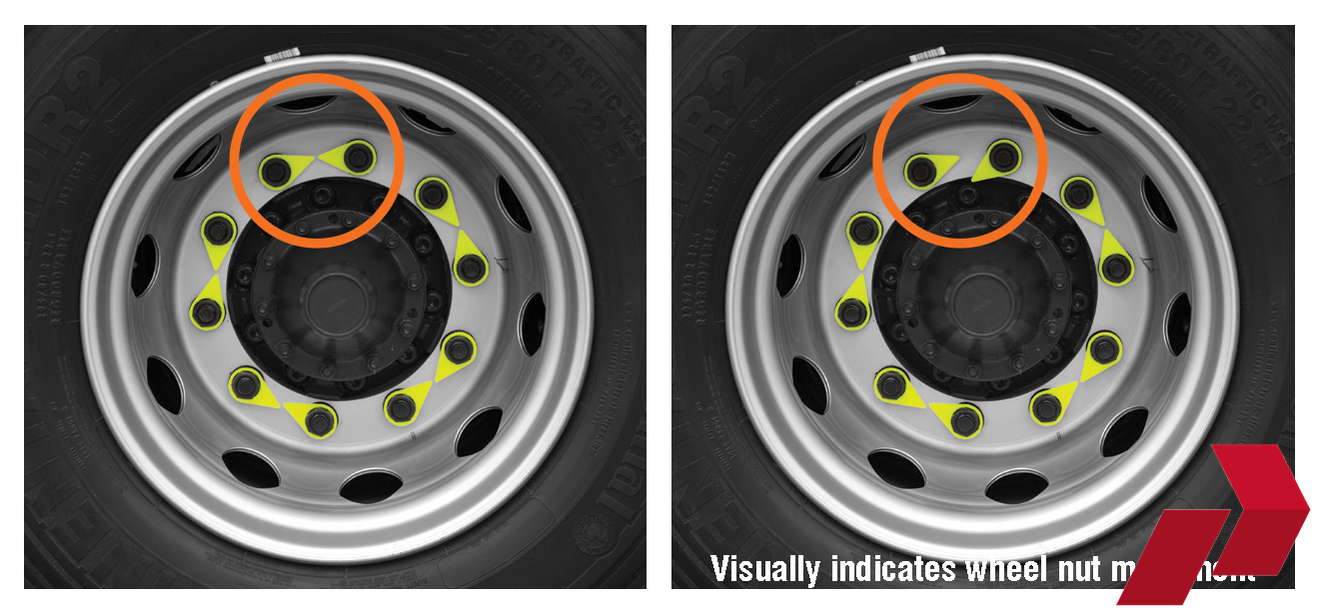
If a wheel nut begins to rotate, the indicator rotates with it.
For example:
-
The wheel nuts are correctly torqued.
-
Indicators are aligned during installation.
-
A wheel nut begins to move during service.
-
The attached indicator changes position.
-
The change is identified during a visual inspection.
The indicator doesn't measure torque or clamping force.
Instead, it provides an immediate visual cue that the wheel assembly should be investigated further.
Why Are They So Effective?
One of the biggest advantages of wheel nut indicators is their simplicity.
They don't require:
-
Batteries
-
Electronics
-
Calibration
-
Specialist diagnostic equipment
Instead, they rely on a straightforward visual comparison.
For fleets carrying out regular walkaround inspections, this allows potential wheel nut movement to be identified in seconds.
This simplicity is one of the reasons wheel nut indicators have become widely adopted across commercial vehicle fleets.
What Wheel Nut Indicators Don't Do
Understanding their limitations is just as important as understanding their benefits.
Wheel nut indicators do not:
-
Prevent wheel nuts from loosening.
-
Lock adjacent wheel nuts together.
-
Replace correct wheel torque procedures.
-
Eliminate the need for routine inspections.
-
Guarantee wheel security.
They're a monitoring device rather than a locking device.
If your objective is to physically help prevent wheel nut loosening, a dedicated wheel nut locking system should be considered instead.
Parma's Choosing a Wheel Safety Device guide explains the differences.
Different Types of Wheel Nut Indicators
Although the operating principle remains the same, several designs are available.
Standard Indicators
These provide a clear visual indication of wheel nut movement and are suitable for most commercial vehicle applications.
Full-Cover Indicators
Products such as Dustite® indicators fully cover the wheel nut while still providing a visible movement indicator.
As an added benefit, they also help reduce the build-up of dirt and moisture around the wheel nut.
Long-Reach Indicators
Long-reach indicators are designed for applications where wheel trims or nut rings are fitted.
Their extended profile ensures the indicator remains visible despite the additional wheel styling components.
Heat-Indicating Products
Some wheel nut indicators are manufactured from polymers designed to deform or melt if exposed to unusually high temperatures.
This can provide an additional visual warning that excessive heat may be present around the wheel assembly, potentially indicating a brake or bearing issue.
Why Correct Alignment Matters
A wheel nut indicator is only effective if it's installed consistently.
If indicators are fitted randomly:
-
Changes are harder to identify.
-
Inspections become slower.
-
Small movements may be overlooked.
Most operators standardise one installation pattern across the entire fleet so drivers know exactly what they're looking for.
This also makes training new drivers and technicians much simpler.
Wheel Nut Indicators as Part of a Safety System
Wheel nut indicators work best when they're one element of a wider wheel safety programme.
Good practice includes:
-
Correct wheel installation procedures.
-
Manufacturer-recommended torque settings.
-
Retorque checks where required.
-
Daily driver walkaround inspections.
-
Scheduled workshop inspections.
-
Wheel nut indicators.
-
Wheel nut locking devices where appropriate.
Using several complementary measures provides greater confidence than relying on a single product alone.
Parma Expert Insight
The real value of a wheel nut indicator isn't that it tells you something has gone wrong—it's that it helps you identify potential movement before it has the opportunity to develop into a more serious wheel safety issue.
Common Misunderstandings
"They Stop Wheel Nuts Coming Loose"
They don't.
Indicators simply show movement if it occurs.
"One Moved Indicator Means the Wheel Will Come Off"
Not necessarily.
A moved indicator is a prompt to investigate the wheel assembly—not a diagnosis of imminent wheel loss.
"They're Only for Large Fleets"
Wheel nut indicators are equally suitable for owner-drivers, small operators and national fleets.
Any commercial vehicle can benefit from easier visual inspections.
"Once They're Fitted, No Other Checks Are Needed"
Routine inspections remain essential.
Wheel nut indicators support inspection procedures—they don't replace them.
Frequently Asked Questions
How do wheel nut indicators detect movement?
Because they rotate with the wheel nut.
Any movement changes the indicator's position, making it easy to spot during a visual inspection.
How much movement can they show?
Even relatively small changes in wheel nut position become obvious when the indicators are installed in a consistent pattern.
Do wheel nut indicators need maintenance?
Very little.
They should simply be checked for damage or loss during routine inspections and replaced if necessary.
Can they be used with wheel nut locks?
Yes.
Many fleets combine indicators with wheel nut locking systems to benefit from both visual monitoring and additional wheel security.
Are wheel nut indicators suitable for trailers?
Yes.
They're commonly used on trailers, HGVs, rigid trucks, buses and coaches.
Related Resources
Continue reading:
You may also find these Parma resources useful:
Make Every Wheel Inspection More Effective
Wheel nut indicators provide a fast, reliable visual reference that supports routine commercial vehicle inspections. When combined with correct maintenance procedures and regular checks, they help drivers and technicians identify potential wheel nut movement quickly and confidently.
Explore Parma's range of Wheel Nut Indicators to find the right solution for your HGVs, trucks, trailers and commercial vehicles.
