




Your Drivers Know More About Your Fleet Than Your Data Does
Modern fleet operations generate an extraordinary amount of information. Telematics monitor vehicle movements and driving behaviour, maintenance systems record defects and servicing, while purchasing data can show exactly what a business is spending across hundreds or even thousands of vehicles.
Used properly, that information is invaluable. But it can also create a temptation to assume that if something important is happening across a fleet, it will eventually appear on a dashboard.
That isn't always the case.
Some of the most useful operational intelligence within a fleet never enters a management system at all. It sits with the drivers who spend every working day with the vehicles and the workshop teams who repeatedly see them coming through the doors.
The challenge isn't necessarily collecting more data. It is connecting the information the business already has.
The things drivers notice that reports don't
A purchasing report can tell you that you've ordered 27 replacement mirror components in six months. It can't necessarily tell you that drivers think a particular vehicle type is especially vulnerable on tight delivery routes.
A maintenance system can show repeated replacement of the same exterior component. It may not reveal that drivers have been complaining about it for months.
Similarly, a defect report might tell a workshop what needs attention today without providing much insight into whether the same issue is becoming commonplace elsewhere in the fleet.
None of this makes fleet data less valuable. Quite the opposite. The useful insight often comes from combining hard data with the experience of the people operating and maintaining the vehicles.
Drivers see commercial vehicles in the environments they were bought to work in: loading bays, construction sites, narrow urban streets, distribution centres, depots and customer premises. They know which components regularly take a knock, which checks are awkward to carry out and which apparently minor frustrations occur again and again.
Taken individually, those observations can be dismissed as anecdotal. When the same feedback starts appearing across multiple drivers, vehicles or depots, it deserves more attention.

There's a difference between reporting a defect and understanding a vehicle
Most operators already have processes for drivers to report defects. That's essential, but it isn't quite the same thing as asking drivers what they have learned from operating the vehicle.
A defect reporting system naturally focuses attention on something that is wrong. Driver experience can reveal something that could simply be better.
That distinction matters.
Consider mirror damage. In an urban or multi-drop fleet, replacing damaged mirror components can easily become accepted as an unavoidable cost of operating large vehicles in confined spaces. Each incident is dealt with correctly: the damage is reported, the part is ordered, the repair is completed and the vehicle goes back into service.
Yet if the same type of damage appears repeatedly across particular vehicles or routes, the useful conversation is no longer simply about sourcing replacements efficiently. It's whether the frequency of those replacements can be reduced.
This is where driver experience can add context that the repair invoice can't.
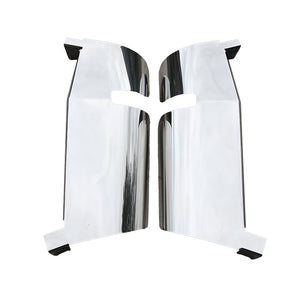
Drivers might identify particular delivery locations, manoeuvres or vehicle configurations where mirrors are especially vulnerable. Once that is understood, measures such as additional commercial vehicle mirror protection become part of a much more informed conversation about prevention rather than simply another product purchase.
For Parma, that's an important distinction. A product should solve an operational problem, not simply add another line to a fleet specification.
Does driver feedback travel far enough?
The problem in larger fleet operations is rarely that nobody knows what's happening. More often, the knowledge exists in different parts of the organisation.
A driver notices the issue. The workshop fixes it. Procurement orders the replacement. Fleet management sees the overall maintenance figures.
Each department can do its job perfectly well without anyone necessarily joining those pieces of information together.
That's why the route driver feedback takes through an organisation matters.
If feedback stops once a repair has been completed, an opportunity can be missed. Workshop teams are particularly valuable here because they sit between drivers and management and can often recognise repeat problems long before they become obvious in high-level reporting.
Procurement should be part of that conversation too.
If a business repeatedly buys the same replacement component, the question shouldn't always be whether it can be bought more cheaply. Sometimes the better commercial question is why so many are being purchased in the first place.
That might lead to a different component, additional protection, a revised specification or a more consistent approach across the fleet. None of those decisions can be made from driver feedback alone, but that feedback may provide the missing explanation behind what the numbers are already showing.

Good specification should support the way vehicles are actually used
There's another side to this discussion that is particularly relevant to fleet safety: how easily drivers can identify that something requires attention.
Daily checks take place in the real world. Vehicles can be dirty, checks may happen in poor weather or low light, and drivers are working within the time pressures of a commercial operation. That doesn't reduce the importance of a thorough inspection, but it does make good vehicle specification important.
Where something can be made easier to inspect, there is a sensible argument for doing so.
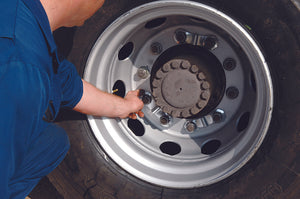
Wheel nut indicators are a straightforward example. Correct wheel installation, torque procedures and maintenance remain fundamental, but a wheel nut indicator provides an additional visual reference that can help identify potential movement during routine inspection.
It is not a substitute for a proper wheel safety regime, and it shouldn't be treated as one. The value lies in making useful information more visible to the person carrying out the check.
The same principle can be applied more widely. When specifying vehicles and components, fleets should consider not only cost and durability, but how the choices they make affect the people who will operate, inspect and maintain those vehicles every day.

Turn experience into fleet intelligence
None of this requires another software platform or a complicated driver engagement programme.
What matters is creating opportunities for operational experience to reach the people capable of acting on it.
Instead of only asking whether a vehicle has a defect, fleet managers can periodically ask drivers and workshop teams which components cause the most frustration, what gets damaged more frequently than it should, which things are unnecessarily difficult to inspect and what they would change about the vehicles they work with.
The answers can then be compared with maintenance records and purchasing data.
One driver's complaint may simply be an individual preference. The same observation from drivers across three depots, supported by repeated workshop jobs and a regular stream of purchase orders, is something quite different.
The Parma Perspective
Many of our conversations with operators begin with what appears to be a relatively simple product requirement. Someone needs a replacement component, wants to protect a particular part of a vehicle or is considering a different approach to wheel safety.
Understanding why they need it is often more useful than immediately deciding what they need.
If mirrors are repeatedly being damaged, we want to understand how and where that is happening. If a fleet is reviewing wheel safety products, the right solution depends on its vehicles, maintenance procedures and operating environment. If the same component keeps being replaced, there may be value in understanding whether the issue is normal wear or evidence of a wider pattern.
That is where conversations with drivers and workshop teams can add real value. They provide the operational context behind the purchase.
Fleet management will continue to become more data-led, and rightly so. But the strongest decisions aren't necessarily made by choosing between data and experience. They come from bringing the two together.
Before investing in another dashboard, it may therefore be worth spending more time listening to the people who already know the vehicles best.
Further Reading
Explore Parma's commercial vehicle mirror protection range.
Learn more about wheel nut indicators and how they can support visual inspection.
For a broader comparison of wheel safety options, read Parma's Choosing a Wheel Safety Device guide.
Talk to Parma
If your drivers or workshop teams are seeing the same vehicle problem repeatedly, talk to Parma. Understanding what's happening in operation can help us identify the most appropriate product or approach for your fleet.
