




Why Do the Same Fleet Problems Keep Coming Back?
Commercial vehicle workshops are very good at solving immediate problems. A defect is reported, the cause is assessed, the necessary parts are sourced and the vehicle is returned to service as quickly as possible.
That's exactly what operators need from them.
The difficulty is that a maintenance process designed to close defects isn't necessarily designed to question why the same defects keep appearing.
In a busy fleet, that distinction matters. A workshop can repair every vehicle correctly, procurement can source every replacement efficiently and operations can keep vehicle availability high, while the business as a whole continues paying to solve the same underlying problem.
Sometimes the bigger opportunity isn't to repair a defect more efficiently. It's to stop having to repair it so often.
When does a repair become a pattern?
In a busy commercial fleet, minor repairs can easily become part of the background noise of keeping vehicles on the road. A damaged mirror is replaced, a missing or damaged component is reordered, or a relatively straightforward workshop job is completed and the vehicle returns to service. None of these incidents is likely to attract much attention on its own, particularly when maintenance teams are also managing servicing schedules, safety-critical repairs and the inevitable demands of vehicle downtime.
The picture can look quite different when those smaller jobs are considered across the whole fleet. If the same components are regularly being replaced, similar damage is appearing on the same vehicle types, or workshops across several depots are repeatedly dealing with the same issue, what looks like routine maintenance at vehicle level may actually be a recurring operational cost.
This is particularly relevant because the true cost of a minor defect rarely stops at the price of the replacement part. There is workshop time involved in diagnosing and fitting it, purchasing and administration time in sourcing it, and potentially disruption while the vehicle is unavailable. None of those costs may be significant in isolation, but repeated across a large fleet they can become surprisingly substantial.
For fleet managers, this creates a useful distinction between high-cost repairs and high-frequency repairs. Major failures naturally attract scrutiny because of their immediate financial and operational impact. Smaller recurring jobs are easier to absorb into normal maintenance activity, which means they can continue for much longer without anyone questioning whether the underlying problem could be reduced or prevented.
That is where looking at maintenance trends rather than individual jobs becomes valuable. The opportunity isn't necessarily to find a cheaper way of carrying out the same repair. It may be to understand why the fleet needs to carry it out so often in the first place.

Maintenance data tells you what happened. The next question is why.
Most fleets already hold much of the information needed to identify these patterns. The challenge is how that information is viewed.
Workshop records show which jobs are recurring. Purchasing data shows which components are repeatedly ordered. Driver defect reports provide another source of evidence, while conversations with drivers and technicians can add the context that isn't captured by a code in a maintenance system.
Put those sources together and patterns become easier to see.
Take repeated mirror damage. On a large commercial fleet, a certain amount may be expected. Mirrors are exposed components operating in demanding environments, and accidents happen.
But there is a point at which repeated damage should prompt a different conversation.
Is it concentrated on a particular vehicle model? Does it occur on specific routes? Are certain depots experiencing more incidents? Is the nature of the damage consistent? Could additional protection reduce the frequency or severity of those incidents?
If the evidence suggests the damage is predictable rather than genuinely random, continually replacing the same components begins to look less like an unavoidable maintenance cost and more like a problem worth designing out.
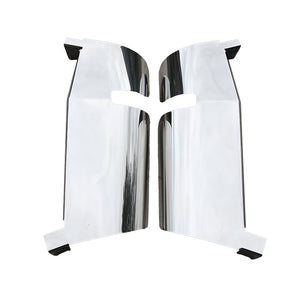
That's one reason Parma supplies commercial vehicle mirror protection across a broad range of truck, van, bus and coach applications. The commercial case isn't simply that a mirror guard costs less than a mirror assembly. It is whether the right protection can reduce a recurring source of damage, disruption and replacement expenditure across the life of the vehicle.
That's a much more useful calculation.
Procurement has a bigger role than finding the best price
There is a broader procurement point here too.
When the same part is being bought repeatedly, negotiating a lower unit cost is an obvious way to reduce expenditure. But if the volume of replacements is being driven by an avoidable operational problem, the biggest saving may come from reducing demand rather than reducing price.
That requires procurement teams to have visibility of what's happening in workshops and out on the road.
It also means questioning whether the product or specification that has always been used remains the best answer.
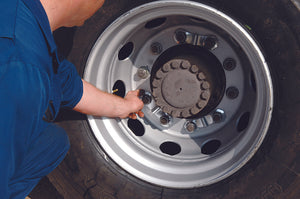
Wheel safety provides a good example because different products perform different functions. A visual wheel nut indicator can help make potential movement easier to identify during inspection, while a wheel nut locking device is designed to resist movement. Neither removes the need for correct installation, torque procedures and maintenance.
The appropriate choice therefore depends on what the fleet is trying to achieve.
Parma's Choosing a Wheel Safety Device guide sets out those differences, but the wider procurement lesson is more important: don't automatically reorder the existing solution without periodically asking whether it remains the right one.
Vehicle applications, routes and fleet requirements change over time, while every year of operation adds to the business's maintenance experience. It makes sense for vehicle and component specification to evolve with that knowledge.

Standardisation can help — but only after you've found the right answer
Once a fleet finds an approach that works, there can be significant value in standardising it.
Large mixed fleets naturally contain variation, but unnecessary variation creates its own problems. Different depots sourcing different components can complicate purchasing, stocking and maintenance. Drivers moving between vehicles encounter different setups, while workshop teams have to manage more parts and more processes.
If operational evidence shows that a particular product or approach performs well, making it part of the fleet standard can turn a local improvement into a business-wide one.
The important thing is getting the sequence right.
Standardising something because "that's what we've always bought" simply embeds the existing problem. Standardising after reviewing defect patterns, driver feedback and workshop experience can remove one.
This is where seemingly small fleet decisions become commercially significant. Saving a few pounds on one vehicle isn't transformational. Removing a recurring problem across hundreds of vehicles can be.
The best workshop job may be the one you don't create
None of this diminishes the importance of fast, effective repairs. Vehicle availability remains fundamental, and when something fails the priority is rightly to get the vehicle back into safe operation.
But the pressure to deal with today's workload can make it difficult to look at yesterday's jobs collectively.
That retrospective view is worthwhile.
A useful starting point is to identify the non-routine jobs appearing most frequently, the parts being reordered disproportionately and whether particular vehicle types or depots account for more of those interventions. Workshop technicians and drivers can then add context to what the records are showing.
The answers won't always produce an easy fix. Commercial vehicles work hard, components wear and damage cannot be eliminated.
But even identifying one or two recurring problems that can be reduced can make a meaningful difference when multiplied across a large fleet.
The Parma Perspective
We see this frequently because many Parma products sit in areas of the vehicle that can easily be viewed as relatively small details: wheel safety products, mirror protection, wheel components and other commercial vehicle accessories.
Individually, these aren't major capital decisions. Across a fleet, however, choosing the right solution can influence how easily vehicles are inspected, how well exposed components are protected, how frequently certain parts require attention and how consistently vehicles are specified.
That's why the most useful conversation isn't always about the product a customer bought last time. We'd rather understand what the fleet is trying to solve.
Sometimes the existing product remains exactly the right answer. Sometimes operating experience suggests another approach. And sometimes what initially appears to be a product problem turns out to have a completely different cause.
The important thing is recognising when repeated replacement has become routine enough that nobody is questioning it anymore.
For fleet operators, that may be the real opportunity. The next time the same repair appears on a job sheet, don't just look at what it costs to fix. Look at how many times you've already fixed it.
Because in a large fleet, the most expensive problems aren't always the biggest ones. They can be the small ones you've quietly learned to live with.
Further Reading
Explore Parma's range of commercial vehicle mirror protection.
Compare different wheel safety approaches in Parma's Choosing a Wheel Safety Device guide.
For practical maintenance guidance, download Parma's Essential Fleet Wheel Maintenance Checklist.
Seeing the same problem across your fleet?
If a component is repeatedly being damaged, replaced or causing unnecessary maintenance, speak to Parma. Tell us what's happening, which vehicles are affected and how they're being operated, and we'll help you identify whether there is a more appropriate product or approach.
