




When Loose Wheel Nuts Lead to Licence Loss
Licence Revocation Is Never Sudden
Having a licence revoked is never just out of the blue. You don’t wake up one morning to find you can no longer run your business - it is the result of patterns. Repeated failures to keep maintenance records, poor defect reporting, and ongoing neglect are what make DVSA alarm bells ring. Guess what? Wheel-related defects are some of the clearest signals you can give that your fleet isn’t up to scratch.
An Extreme Case: BTW Transport
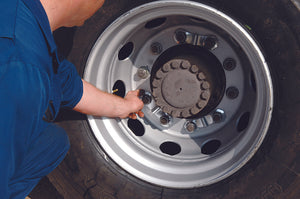
Recently, a very extreme case of vehicle neglect has resulted in The North East-based haulier, BTW Transport, having their operator’s license revoked, their transport manager disqualified until further order, and their director disqualified for 12 months. The company operated 7 lorries. Back in January 2024, the DVSA were carrying out their normal inspections and found loose wheel nuts, and got an ‘S’ marked prohibition - the most severe type that indicates a serious roadworthiness defect.
A follow-up inspection in March uncovered poorly completed maintenance records, including checks logged for components that were not even fitted to the vehicles. Brake testing was missing, driver defect reporting was ineffective, and wheel and tyre maintenance systems were found to be inadequate.
As enquiries continued, it emerged in April that one vehicle had been operating without a valid excise licence for a prolonged period. At the same time, the transport manager was unable to access tachograph analysis systems or provide driver training records. A further ‘S’-marked prohibition followed. Another inspection in August revealed yet more issues.
After a lot of back and forth, a public enquiry was held in September of this year. The company is now disqualified from holding or being involved in having any operators licence for 12 months.
Why Wheel Defects Trigger Serious Attention
Now, as above, this is an extreme case where several things went wrong. It is a good thing that these loose wheel nuts triggered such an in depth investigation, leading to dangerous vehicles being taken off the road, and removing power from irresponsible management who put them there. But it reinforces that wheel defects are one of the clearest early warning signs DVSA take seriously.
It should also not be lost that wheel maintenance cannot just be a cover for good all-round maintenance. This case reminds us that proper care of vehicles holds the backbone of transport businesses - people’s livelihoods. While the loose nuts started the enquiry, it was the lack of comprehensive maintenance systems that caused such an intense case. Reactive and deflective excuses made by those in charge were not credible.
Maintenance Is Not a Tick Box
Maintenance checks, including wheels, are not just a tick box. Are daily walk-arounds a slog? Sure. So how can we make it easier, ensure defects are actually being reported, and things are not missed?
For a start, wheel nut indicators show when a wheel nut has become loose - so you can spot it before an inspector does, allowing you to rectify. Any movement or changes should be properly documented - showing that you pay attention and fix issues is a good thing.

Indicators vs Retention Devices
However, indicators alone do not prevent wheel loss. They are a visual warning, not a retention device. This is where wheel nut locks play a role. Products such as Zafety and Prolock fit across two adjacent wheel nuts, clamping the two together so they can’t come off. Torque checks are still incredibly important, and they don’t eliminate the need for good maintenance, but they do assist with keeping a vehicle’s wheels safe and where they should be should something go wrong.

Preventative Systems Protect More Than Vehicles
Preventative measures will always outperform reactive ones - and DVSA’s approach makes that clear. Supporting drivers with robust systems protects not just vehicles, but people, livelihoods, and reputations.
Maintenance is a habit. The operators who stay compliant are the ones who never stop paying attention.
You already know how to check your wheels. The right systems just make sure nothing gets missed.
